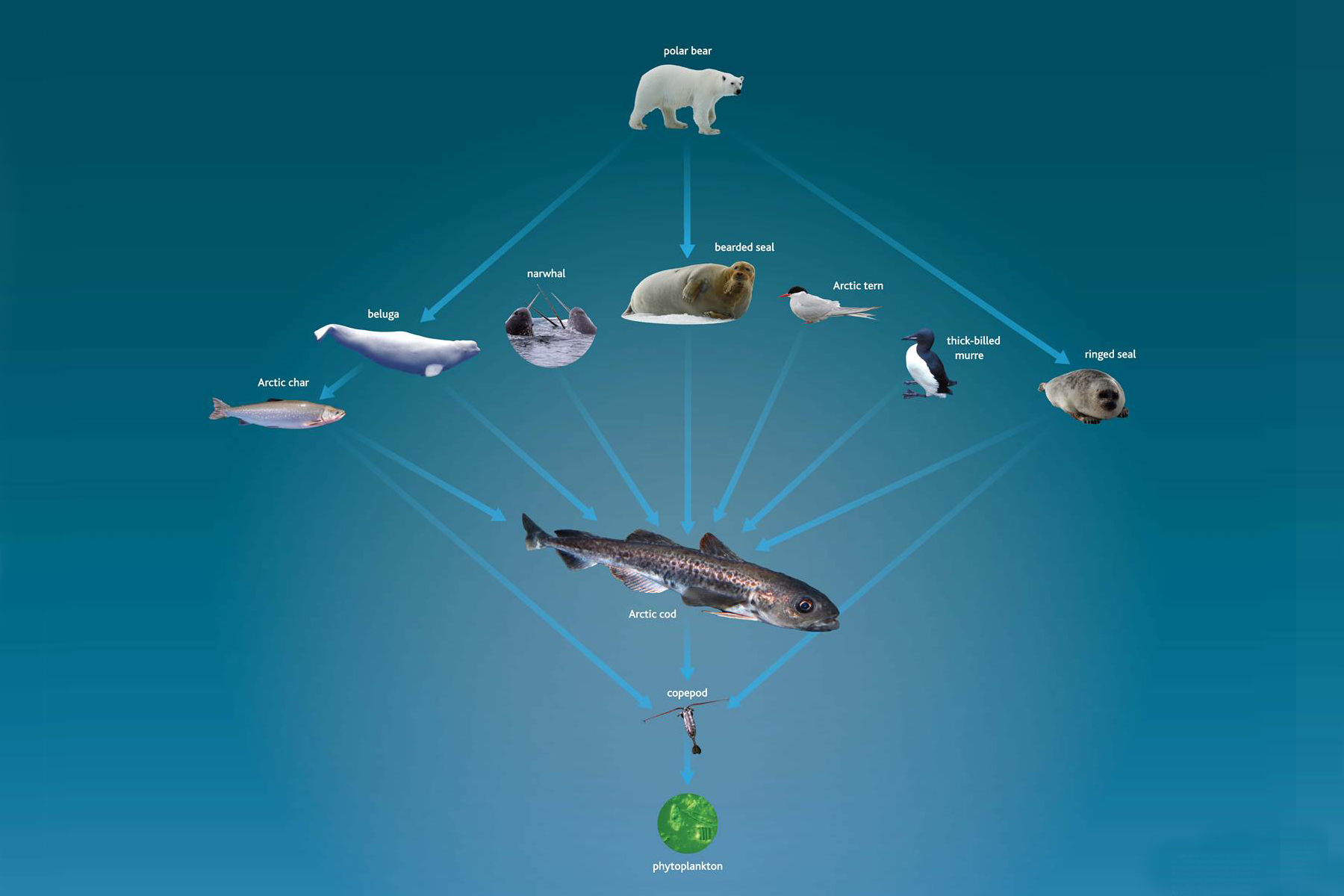
Arctic Polar Region Food Web Activity Biology Diagrams Other animals, however, are very dependent on this ice: like polar bears, walruses, and seals, being their resting, breeding, and hunting ground. Scientists say that there are about 240 different species of fish living in the Arctic Ocean. An integral food chain link among them is the Arctic cod, which links the underwater web with the one
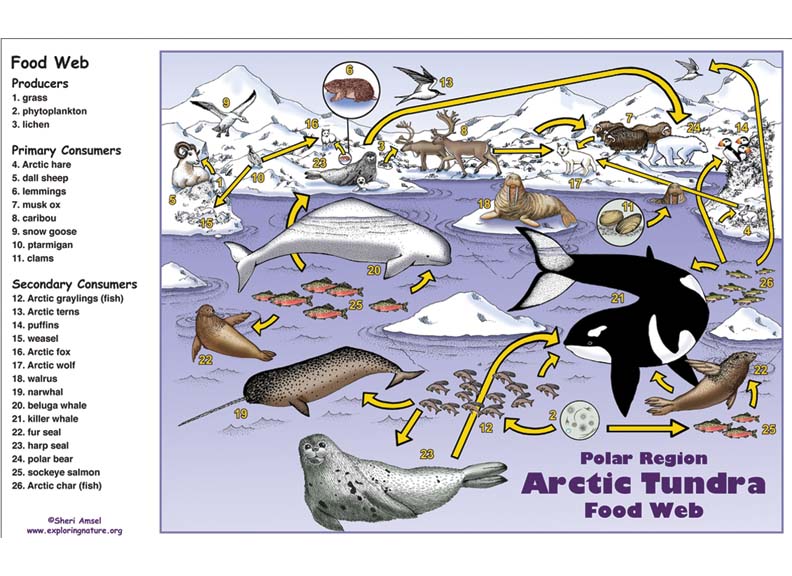
Christian SaraviaWalruses are some of the most important marine animals and they play a vital role in the health of the arctic and subarctic ecosystems. They are foraging predators who rely heavily on the diverse creatures of the ocean floor. Walruses feed primarily on benthic invertebrates such as clams and mussels. Unfortunately, unsustainable fishing practices disturb the natural balance of
Ask A Biologist Biology Diagrams
and walruses, have a thick layer of blubber (fat) under their skin. Blubber acts like a cozy blanket, keeping the animal warm in freezing water. It also stores energy for when food is hard to find. small body parts Arctic animals often have small ears, tails, and noses to keep from losing heat. Smaller body parts mean less skin is exposed to
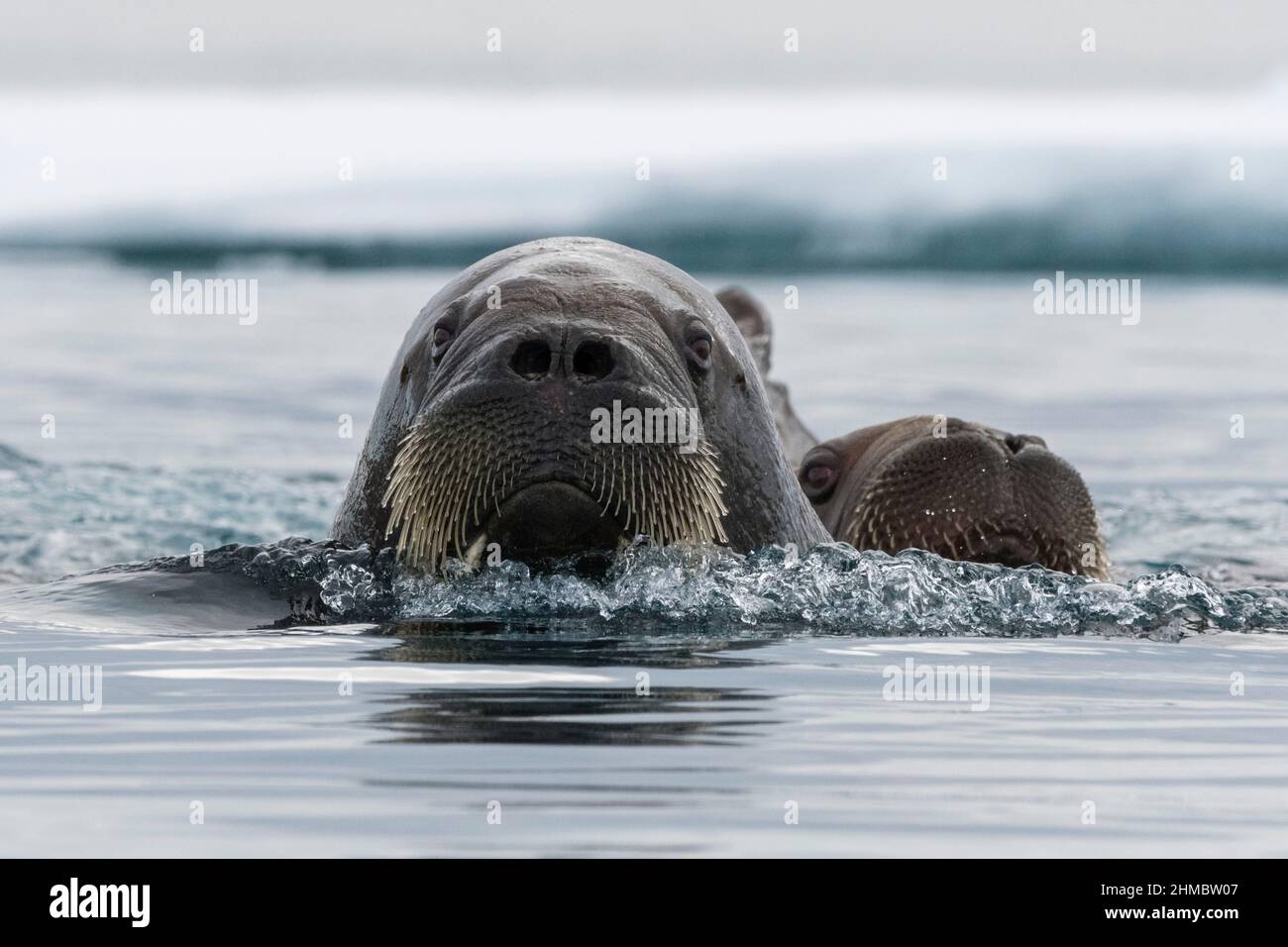
Walruses play a significant role in the animal food chain as prey and predators. By feeding on benthic organisms, they influence the structure and the local population of benthic invertebrates. As such, they help maintain a balance in the arctic ecosystem. Further, their foraging behavior makes them the Arctic's keystone species.

PDF The Arctic Circle Biology Diagrams
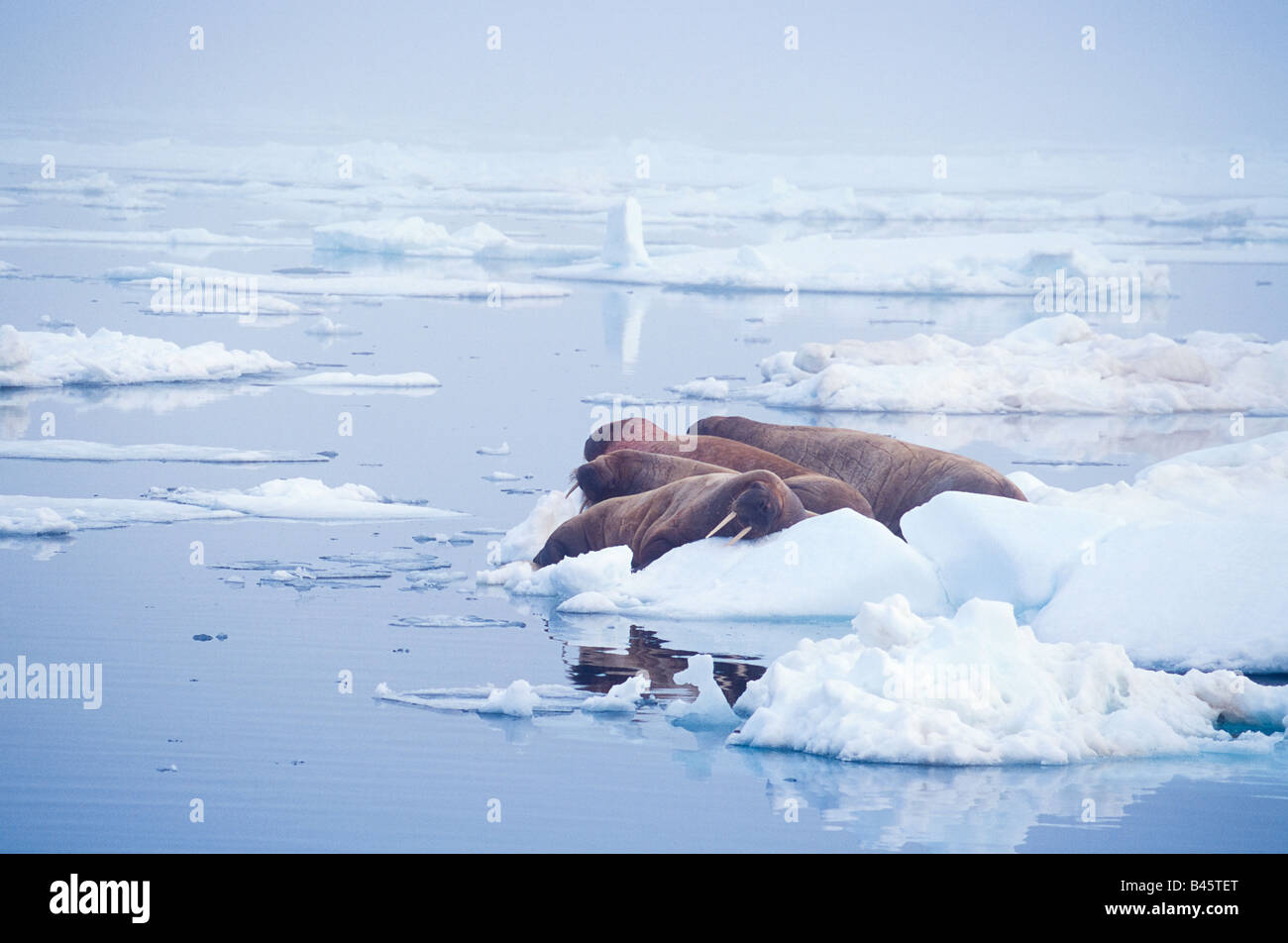
This particular ice floe, or large piece of floating sea ice, carries a pod of walrus through Arctic waters. Otis is a walrus pup born on that ice floe in late spring in the Chukchi Sea, Ocean acidification is just one way that humans are disrupting the Arctic food chain. Human activity in the Arctic, like oil drilling, can lead to