Exploring Cell Senescence A Journey into Cellular Aging Biology Diagrams Cellular senescence is important for ensuring normal development and organism fitness against diseases including cancer. Meanwhile, accumulation of senescent cells during aging can be detrimental, contributing to age-related diseases. This review discusses recent advances in understanding the functional significance of senescence in these contexts and the potential translational impact.
Cellular senescence is a stable and terminal state of growth arrest in which cells are unable to proliferate despite optimal growth conditions and mitogenic stimuli (Boxes 1,2; Fig. 1).Senescent Aging is the major risk factor for cancer, cardiovascular disease, diabetes, and neurodegenerative disorders. Although we are far from understanding the biological basis of aging, research suggests that targeting the aging process itself could ameliorate many age-related pathologies. Senescence is a … An increasing number of researchers are exploring whether learning to harness a cellular state known as senescence — during which damaged cells resist removal by apoptosis, linger, and harm neighboring normal cells — might hold the key to revitalizing aging tissues and increasing healthy, active years of life.
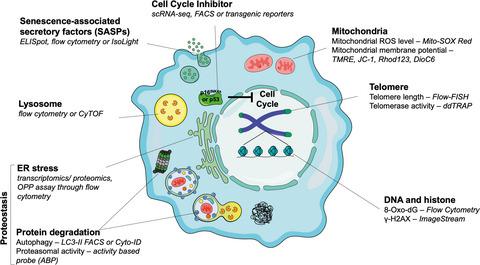
Aging of the cells: Insight into cellular senescence and detection ... Biology Diagrams
While cell senescence can play protective roles (e.g., Over the past decade, the significance of cellular senescence in brain aging has grown substantially. Studies using transgenic mouse models (e.g., INK-ATTAC, p16-3MR) and senolytic agents (e.g., D + Q, navitoclax) have demonstrated that targeting senescent cells can mitigate numerous And totally different cells might share senescence features. Take p16 and p21, two proteins identified as drivers of cell senescence. Even if some cells highly express p16, whereas others highly

Abstract. Background: Cellular senescence is a state of irreversible cell cycle arrest that serves as a critical regulator of tissue homeostasis, aging, and disease.While transient senescence contributes to development, wound healing, and tumor suppression, chronic senescence drives inflammation, tissue dysfunction, and age-related pathologies, including cataracts.

Cellular Senescence Is a Central Driver of Cognitive Disparities in Aging Biology Diagrams
Senescence, from the Latin word senex, means "growing old," is an irreversible growth arrest which occurs in response to damaging stimuli, such as DNA damage, telomere shortening, telomere dysfunction and oncogenic stress leading to suppression of potentially dysfunctional, transformed, or aged cells. Cellular senescence is characterized by