Interactions Within Communities Biology Diagrams All species within ecosystems contribute to regulating carbon cycling because of their functional integration into food webs. Yet carbon modeling and accounting still assumes that only plants, microbes, and invertebrate decomposer species are relevant to the carbon cycle. Our multifaceted review develops a case for considering a wider range of species, especially herbivorous and carnivorous

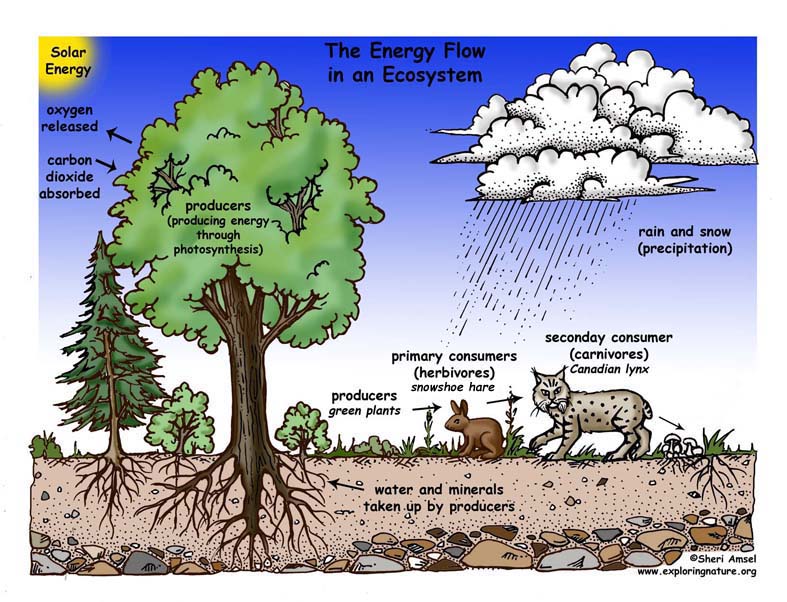
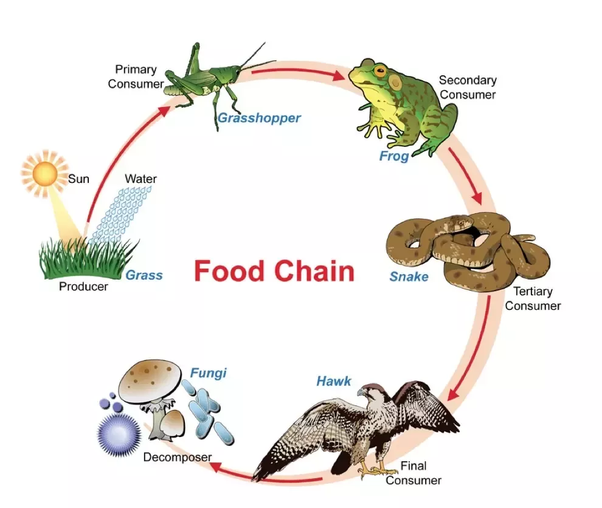
Food chains, the nitrogen cycle, and the carbon cycle are examples of these interactions. A food chain is the sequence of steps through which the process of energy transfer occurs in an ecosystem. All organisms need a continuous supply of energy. Energy flows throughan ecosystem in one direction— through foodchains.
20.3: The Carbon Cycle Biology Diagrams
Carbon moves from one storage reservoir to another through a variety of mechanisms. For example, in the food chain, plants move carbon from the atmosphere into the biosphere through photosynthesis. They use energy from the sun to chemically combine carbon dioxide with hydrogen and oxygen from water to create sugar molecules. Carbon dioxide in the atmosphere is taken up by green plants and other photosynthetic organisms and is converted into organic molecules that travel through the food chain. Carbon atoms are then released as carbon dioxide when organisms respire. The formation of fossil fuels and sedimentary rocks contributes to the carbon cycle for very long Food Chains and Food Webs. In ecology, a food chain is a linear sequence of organisms through which nutrients and energy pass: primary producers, primary consumers, and higher-level consumers are used to describe ecosystem structure and dynamics. There is a single path through the chain. Food chains do not accurately describe most ecosystems.

Food webs and the carbon cycle are very closely related because every living organism is made up of carbon. When a cow eats grass, it is consuming carbon. When a person eats the cow, the person consumes carbon. Thus, carbon moves through food webs. It leaves living organisms through respiration and when organisms die and decompose.
Definition, Process, Diagram Of Carbon Cycle Biology Diagrams
This is the only process in the cycle that decreases the level of carbon dioxide in the atmosphere. Feeding - moves carbon in the form of biological molecules along the food chain.
